I spent time with many Haitians of different classes and witnessed in all of them attitudes better than the ones I have on my bad days--days which, even if strung together at their worst would create a year that could not begin to compete with the year the Haitian people just experienced.
1.12.2011
hope for a new year
I spent time with many Haitians of different classes and witnessed in all of them attitudes better than the ones I have on my bad days--days which, even if strung together at their worst would create a year that could not begin to compete with the year the Haitian people just experienced.
1.07.2011
calebasse: a conclusion
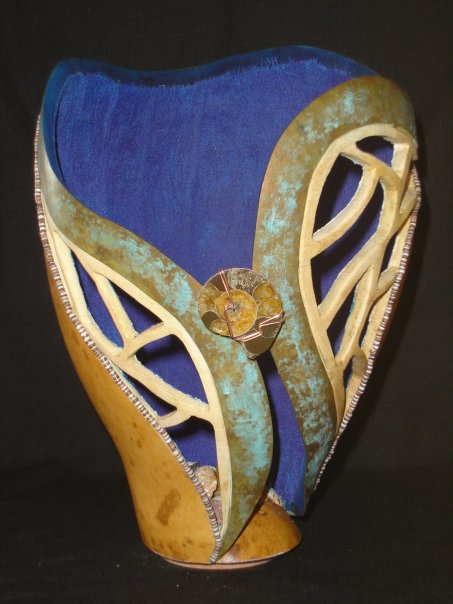
Before we got the surprise call to Ebenezer Clinic, I was writing a lot about Mom's calebasse project. Needless to say, the cholera epidemic put our calebasse plans on hold for three weeks, but when we got back to Port, we jumped right back into the project. And just like the rest of our trip, this project turned out differently than we expected, but was still successful, as far as I can tell.
Originally, Mom thought the main part of the project would entail giving classes at a local art gallery. She hoped that she would also be able to spend a little time at her friend Caroline's school. Well, classes at the art gallery fell through, but this just meant that our focus shifted to the school. Considering that we had less time than originally planned (due to the three weeks we spent in Limbe) it was actually a blessing that we could narrow our focus.
So, as I wrote in a previous post, I spent one day teaching kindergarten kids to make calebasse ornaments. After I came home and showed Mom the pictures of the kids and their ornaments, she was rearing to head to the school the next day to work with the older students.
On our second day at the school, we met the art teacher, Hans Francois. He is an accomplished multi-media artist who has even done a little work with calebasse. Furthermore, he has previously been involved in organizing community art clubs and would like to start an art club for interested students at the school.
Before we went to Haiti, Mom had collected tools and supplies for calebasse art that she had intended to donate to the art gallery after she taught the artists there how to use the tools. Since that was no longer an option, Mom was happy to find an excellent alternative: she left the remaining calebasse and all the supplies with Hans Francois. He plans to apprentice a few interested older students, teaching them new methods and how to use the electric tools.
This is only one example of the interest Mom raised with her calebasse project. The family we were staying with--who had no interest in calebasse art before Mom introduced it--grew increasingly interested as they witnessed her process of collecting and drying calebasse.
But even the Haitians who were most interested in calebasse art were highly realistic--I guess this is where Haitians get their reputation as masters of micro-enterprise. Thus, throughout our trip, Mom found herself continually challenged by the following, very fair question: "Where is the global market for calebasse/gourd art?"
I once heard that the goal of the best teachers is to leave their students asking more questions at the end of a lesson than they had at the beginning. If this is true, Mom's calebasse project has been a successful lesson--it has left her with some research to do.
So before Mom makes any more plans to spread the possibilities of calebasse art throughout Haiti, she is interested in looking into exactly what its possibilities might be--not only from an artistic standpoint, but also from a marketing standpoint. As she brainstorms the answer to the Haitians' question, Mom is open to collaboration. If you have any ideas about this subject, she would love to hear them!
1.06.2011
haiti conclusions to come...
Rather, my lapse in blogging was due to the typical busyness of the holiday season, which for me included participation in my cousin's beautiful wedding on New Year's Day. So I apologize for the rather ungraceful halt to my Haiti articles. But on the other hand, I suppose that most of you were just as busy as me over the past couple of weeks and wouldn't have had much time for reading anyways. So, if you are still interested, I have a few more stories about and reflections on my trip to Haiti that I would love to share (and my mom has some input, too!)--even though I am not there any more.
So stay tuned for some conclusions about our trip--I'll try not to leave you hanging this time!
12.24.2010
the haiti you don't see on the news
The beach was wonderful--It rivaled the one in Danang, Vietnam. But as I was laying on my
When we got back from the beach, Jean-Claude seemed a bit more satisfied. He said, "Calah, I just wanted to make sure you knew that there's more to Haiti than cholera and Port-au-Prince traffic jams."
I told him that I had, throughout my trip, been pleasantly surprised by Haiti's natural beauty. On the news, we hear about Haiti's deforestation, poverty, and political turmoil, things that certainly do exist in Haiti. But I think the problem is that, when we focus so much on those things, we start to feel that Haiti is a hopeless case. But really, there are things in Haiti that can give us hope if we can get past the pictures on the news and notice them.
As I have mentioned before, Haiti really is a beautiful country. There is widespread deforestation and there are congested, dirty cities. But Haiti's natural beauty does shine through.
This is the view from the top of a mountain I hiked a couple times during my stay in Limbe. This Cape is the first place Columbus landed in Haiti, and his crew members were fighting over who would get to stay on the island!
Over the past twenty years, Haiti has become notorious for political turmoil. I got to witness this a bit with the election that took place during my stay. But in my politically-illiterate opinion, the protests that took place this December display more than sheer reactionism. Rather, it is clear that the Haitian people are sick of being manipulated by big governments (both their own and foreign) and that they are ready to take a big risk in hope of seeing a big change.
And not least, the Haitians I met during my visit gave me incredible hope for the country. The doctors and nurses working with cholera in Limbe; and Madame Hudicourt, who has spent her life overcoming obstacles to bring her people medical care--these people inspired me. Furthermore, all the members of our host family were unbelieveably gracious, welcoming, and upbeat even after the hell of a year that they have lived through.
After our trip to Furcy, I was talking in awe about Haiti's beauty, and Annouck (Jean-Claude's wife) said, "No matter what they say, I still think there is still hope for Haiti." I can't help but agree.
12.17.2010
another unexpected task
So as if being a nurse wasn't enough, for good measure, it seems, I have had the opportunity to try out my other black-listed profession: Teaching. Not just any teaching, mind you--but teaching kindergarten children!
This morning Mom woke up with a raging migrane headache that made all light as if blinding to her eyes...
..So it fell to me to show 27 kindergarten students how to make figurine ornaments out of calebasse shards, wire, and beads. And, hey, I survived! Unlike the kids at the cholera treatment center, these did not burst into tears at the sight of me simply because I'm a blanc.
I won't say that I particularly enjoyed or hated the experience itself. I am definitely not a naturally-gifted, charasmatic teacher. But I had lots of help and it was nice to see the kids enjoying themselves and doing something different.
12.16.2010
transitions
Over the last few days, we have noticed a significant weather change--we are a little chilly sometimes. To us, it feels good, but some Haitans complain of it being cold. However, when I find myself reaching for a long-sleeved shirt, I can't help but think of the shock that is coming for me in a week! If Haiti's 72-degree lows make me wish I had a sweatshirt, Illinois' 24-degree highs will surely send me into hibernation?!
Even more shocking than the weather change might be diving head-first into the height of the American holiday season! I was shocked yesterday when I realized that Christmas is so close. Here, there is a dusting of holiday anticipation, but I know that it is nothing to the blizzard (both literal and figurative) that I know from experience will hit me when I arrive home.
But while the blessings and stresses of the transition home are still a few days ahead of me, Mom and I have another transistion right here--from cholera in Limbe to calebasse in Petionville. Due to the unexpected 3-week stay in Limbe, the calebasse project will have to be condensed. Mom plans to spend two days teaching calebasse art to students in a primary school. I plan to take lots of pictures and tell you about it. :)
12.14.2010
leaving limbe
Shirley gives us the "cholowa" fist pound. (This has become popular since the outbreak because people are more cautious about shaking hands.)
Shirley, a nurse, is also a student at the university and used to work at the university infirmary. Her boss there told her that she would lose her job at the university if she started working at the cholera treatment center, but she chose the CTC because she knew that her community needed help.
Many other people spoke of their families being afraid for them to work at the CTC. Elio, one of our translators, often had to go to the gate or answer his phone while he was working because his sister was worried about his safety.In some areas of the country, cholera patients have been hacked to death because their neighbors feared that they would bring the disease into the community. In other communities, people have killed witch doctors, accusing them of cursing their village with cholera. Some people we talked to said they would rather have HIV than cholera!
Fear is such a powerful thing. Acknowledging the fear of cholera that overwhelms this country makes me respect the staff even more. It takes courage to treat cholera.
In our interviews, the staff also bestowed upon us heaps of gratitude and blessings for our being here. This experience proved something Mom has said over and over again--when you serve like this, you always feel like you receive far more than you give. This is definitely how I feel. I never expected my first encounter with death to be so encouraging; I never expected treating cholera to be so much fun.
I am going to miss these people who welcomed me here--even though I am not a nurse.
12.12.2010
sabbath at the beach
After an hour and a half of jolting (have I mentioned how crazy the roads are here? Everyone has 4x4s--because they actually need them!) up and down the mountain and through Cap Haitian, we had a lovely time.
I ran along the beach for a while before jumping in and looking at the fish and spikey monsters on the bottom (they are like sea porcupines--not nice to step on, from what I hear). The beach was quiet and peaceful--great for reading a book.
My only regret was when I discovered this giant backgammon board and wished my dad was there to play it with me.
Then it was the jolting (but did I mention beautiful?) ride home.
12.11.2010
political unrest
Well, the elections came and went with relatively little mass violence, but with plenty of ill-concealed fraudulence. There were wide-spread reports of stuffed ballot boxes and armed thugs "monitoring" people's votes. However, even given these reports and an outcry by most of the main candidates for a re-vote, some political leaders were calling the election fair. However, the results were not to be announced until a set period of time later (in accordance with the constitution).
The results were announced late Tuesday night--and no one was very happy about them. Including some of my fellow volunteers, who were supposed to fly home on Wednesday, but could not get to the airport because of the roadblocks on the way to Cap Haitian. It turns out that they wouldn't have made it even if they had gotten to Cap Haitian, because all flights into and out of the country were cancelled for two days. Today, however, the way was clear--at least for long enough that four volunteers made it to the airport and safely home.
Other than this, we have mostly just heard rumors about the demostrations--both peaceful and otherwise--that have been rampant in other areas of the country. In one community, a couple people were killed and a few others injured, and all the government buildings were burnt to the ground.
Our friends in Petionville said that, on the night the results were announced, they heard gunshots, sirens, and burning tires all night long. On the brighter side, we also heard that one of the main candidates held a peaceful demonstration that included hundreds of people marching down the streets of Port-au-Prince.
According to our original plans, Mom and I would have been in Petionville/Port-au-Prince right now, so we are happy to have missed the commotion. We plan to return to Port on Tuesday; we hope that things have settled down by then!
12.09.2010
a first time for everything...
12.07.2010
a light at the end of the tunnel
Thankfully, we have been able to relieve their stress a little. On Sunday, Dr. Steve went with his family to the beach for the day. He told us that Saturday night was his first full night of sleep in a month and that Sunday was the first day he didn't go to the since cholera started.
Dr. Manno sporatically appears at the cholera clinic at all hours of the day and night, while also keeping regular hours at Ebenezer and hosting temporary staff in his home.
Some of the nurses we work with at night have been doing 12+ hour nights for weeks without time off.
The two doctors that Medicines Sans Frontiers (MSF-Doctors without Borders) hired two weeks ago just got their first weekend off--they have been alternating 12-hour shifts.
Two of the regular staff at the clinic who were assigned to the cholera clinic full time have been putting in 70- and 80-hour weeks with no extra compensation.
These people really need a break.
MSF, a huge organization that responds to international medical crises, just started assisting Ebenezer in organizing it's cholera treatment center. We have seen leaps and bounds of improvements over the last few days. MSF's real goal is to set up a large-scale cholera treatment center in Limbe where small treatment units like Ebenezer can refer patients. If this goes as planned, Ebenezer will be able to close up its cholera treatment center altogether and transition back to normal.
Well, Even MSF, huge as it is, has reached its limits. Apparently, Haitian cholera is the biggest medical crisis it has responded to in its history! But we can only hope that steps are being made in the direction of a large CTC in Limbe--it's the light at the end of the tunnel to which the Ebenezer staff are looking for hope.
12.06.2010
speechless: a photo gallery
12.04.2010
fun at the cholera clinic
Last night, Mom and I were on the night shift. Things were pretty hectic from 4 to 6:30. But after supper, things were pretty calm and we both decided that 8-12 is definitely our favorite shift!
One really encouraging thing was that we had a number of patients make a point to thank us for our help and ask God to bless us for it. But they said something else that bothered us: that no one died last night because we (the foreigners) were there. This statement reflects a big problem (and one that makes us uncomfortable) in Haiti; the people think that foreigners are better than their own providers. In this way, foreigners who come in trying to "help" often unwittingly intimidate and disempower the Haitian people. I, personally, don't want any part in this cycle, and I wholeheartedly admire the Haitian staff for their sacrifice.
Yesterday morning, Dr. Steve encouraged us to make our best efforts to form community with the Haitian staff. Up until now, there has not been a lot of communication between the foreign volunteers and the Haitian staff, largely because of the language barrier. We have been able to relieve their pressure, but mostly each group has done its own thing, working more around each other than with each other.
So after supper, Mom and I took Steve's advice to heart and used our wits and resources to try to build up friendships with the staff--bribery with leftover cookies! Well, people are people everywhere, and who doesn't like a cookie? But the cookies were really just a convenient excuse to introduce ourselves and talk with them. Throughout the rest of the evening, we were able to relieve some of the burden on the Haitian nurses and doctors who have been working around the clock for the last few weeks. But since things were pretty calm, we also got to talk and laugh with them so much! It was the most fun I've had in a while.
The staff especially love my mom. It helps that she knows a decent amount of Kreyol (although you would never know it if you hear her berate her own skills) and also that she has a sense of humor in which she is not afraid to risk making a fool of herself. The staff and patients love her for it! We actually stayed until 1am instead of midnight because we were so busy talking and laughing.
Mom and I also had the chance to talk to Dr. Manno for a good long time--quite an accomplishment because he is extremely busy right now. Manno is the medical director of Ebenezer clinic, so managing the cholera clinic is a whole second job on top of that. At first I was kind of scared of him, but now I appreciate him more and more with every encounter we have. He is hilarious, too, something that always helps. :)
I came away from last night feeling--once again--encouraged, filled with joy, ever-more impressed with the Ebenezer Clinic and staff, and actually looking forward to work tonight!
12.03.2010
cholera article
So if you want a perspective other than mine, read away!
12.02.2010
anpil blan
We continue to get into a more organized system. Now, a bunch of new foreign volunteers came in, so our numbers are up from 4 to 12 (foreigners, in addition to the Haitian staff)! Mom and I were wondering if this was our cue to leave. Yesterday there were anpil blan (a lot of white people) at the clinic! I came home to take a break and do some writing because I didn't feel needed.
I knew that the extra help and slowing stream of patients was a good thing, but I was a little sad about leaving here. I have enjoyed staying busy and feeling useful. But now it sounds like we will be here a while, anyways, because...
Mom and I spent the morning making a volunteer staff schedule! Now that we have more people, we have the luxury of a shift schedule. We will split our time and even start doing some nights. So I haven't actually worked at the clinic this morning, but somehow I still feel exhausted--coordinating is tiring too, I guess!
So now I'm off for a nap before I go to work.
11.28.2010
encouragement in the face of death
11.26.2010
happy thanksgiving
11.22.2010
change of plans
I have been in Limbe before, when I was 2 years old. I thought it would be cool to visit there again, but this isn't exactly the kind of visit I was expecting.
To answer the question I'm sure you are asking, you're right: I don't know anything about medical work. Mom used to be a nurse and even practiced a bit in Haiti. For me, however, this is going to be a shocker. I don't have any experience with sick (and dying) people. Prayers are appreciated.
I have no idea how much you will be hearing from me over the next couple weeks. But don't worry--I plan to wash my hands at every opportunity. :)
11.20.2010
election expectations
Gmail does this to me: I write an email about a race I ran--Voila! The ad bar tells me about an online running store. The longer I lived in Viet Nam, the more my ads started to appear in Vietnamese. I even had ads asking me, "Do you speak Tieng Viet?" At first I was really excited--I knew what Tieng Viet meant! Later, I hit a block in language classes and decided that the ad was trying to rub it in. Of course, sometimes even technology can be wrong, like when my ads ask, "Single and bored? Chat with Alyssa (insert picture of large-chested woman) at singleandbored.com!" Yeah, not so much...
The Haitian presidential elections that are coming up the weekend of Thanksgiving are all around us here. It was actually one of the first things I noticed when we arrived. On the way home from the airport, I noticed that the street walls were plastered with campaign ads. When I mentioned them, Jean-Claude was off and running--introducing us to a few of the 19 (!) candidates (with his opinions on each, of course), and relating stories of past elections--manipulated or accurate, violent or (rarely) peaceful--and the demonstrations that went along with them.
People have rearranged trips to make sure they are in the country to vote. Even young people are interested. The other day at lunch, Jean-Claude's fifteen-year-old daughter Sophie asked everyone present who they were planning to vote for.
With 19 candidates, I don't know about all of them. But a recent poll revealed the main players, people whose names I have become familiar with over the last two weeks:
Mirlande Manigat--this female candidate was on the top. Both she and her husband have been involved in Haitian politics before.
Jude Celestin--this guy is backed by the current president and his party. Apparently, no one had heard of him until six months ago; people laugh at the interesting coincidence that he happens to be very good looking.
Jean Henry Ceant--I don't know much about this guy.
Charles-Henri Baker--the guy Gmail told me I should vote for. He seems to be pretty well-respected, but he is very light-skinned, a factor that many think will go against him.
Even more interesting to me than the actual election (I must admit, I'm pretty much politically illiterate) is the anticipation about the upcoming events, and what this reveals about Haiti's history, a history that affects how Haitians--of all classes--think and live.
Elections are something you have to prepare for. I don't mean that you just have to research and decide who you are going to vote for. No, you have to plan your life around the event. When you plan for election weekend, you plan for the unexpected.
Last night, Jean-Claude and Annouck came back a little late and brought a lot of groceries. After they put them away, Annouck gave a satisfied sigh and said, "Good! I have enough to last through election weekend, so I won't have to go out."
Mom and I went out to listen to live music Saturday night, and people told us that it will be the last night it's advisable to be out until the elections are over. During the week prior to the event, no one goes out more than they have to. It is not that anything bad will necessarily happen; things could be completely quiet and peaceful. But people know the history and plan accordingly, because no one wants to be in the wrong place at the wrong time.
You might say, "At least all this planning for uncertain events only lasts a short period every few years." But with so many candidates and the Haitian laws regarding elections, it is more than likely that there will have to be a re-vote. To win, a candidate must receive fifty percent of the votes plus one. In the poll I mentioned, the most anyone received was 30 percent.
And all of that is, of course, dependent on whether the election is fair or rigged--a big question in everyone's minds.
I guess it just goes to show that, even in our technological age, there are some things that even Gmail can't predict.
clearing up calebasse confusion
I have received some comments that tell me that I have not been clear enough regarding Mom's project with the calebasse. Of course, I never know how many details you are really interested in reading, or whether such details are a bore. So, I will try to make a short explanation to clear the subject up. This will be helpful for you in understanding future calebasse posts.
Gourds are fruit in the squash family. Those colorful squash that are always falling out of Thanksgiving cornucopias? Those are decorative gourds. The ones Mom works with are the "hard-shell" variety. Gourds have a relative called calebasse (that is the French) or calabash. While gourds grow on vines, calebasse grow on trees and tend to have thinner, harder shells than gourds.
Every continent in the world naturally grows either gourds or calebasse. Historically, both gourds and calebasse have had many everyday uses. For example, many indigenous groups have cut gourds open and used them as water vessels. This is how calebasse were used in Haiti until recently. Those pictures you might have seen of Haitian women carrying water on their heads? They might have been carrying it in calebasse vessels.
When Mom visited Haiti in April, she noticed calebasse on display in an art gallery. Haiti is quite well known for its art. However, while talking to a gallery owner and looking at the art on display, Mom discovered that calebasse art is one of the less-developed art media in Haiti. The gallery owner expressed interest in Mom giving workshops to her artists if Mom should return to Haiti.
So this time Mom came prepared. She plans to give workshops both at the art gallery mentioned above and at an elementary school.
But first she needs the calebasse, which is why she has been hunting them down. The calebasse take a while to dry, so at the beginning of our stay (now) she will focuse on collecting and drying the calebasse. Toward the end of our stay, she will give the workshops.
Thus, the subject of calebasse will probably make a regular appearance on this blog over the next month.
If you are interested in checking out more of Mom's work, visit the "Gourds" page of Mom and Dad's website.